
The Refuge Permaculture Center
At Tara Farm and Nursery
Tag: #permaculturedesign
-
A Cozy Read:The Refuge Permaculture Newsletter
Did you receive your email copy of The Refuge Permaculture Newsletter yesterday? No? I would be very pleased to add you to my secure email list and send you a copy. “Enlightening” may be a bit hopeful on my part, but “informative”, “supportive”, “interesting” work just fine. Send an email to tarafarmandnursery@gmail.com with “Newsletter” in…
-
Are You Among the Super Smart Earth-Life Folks?
Many, many of you have asked if you should “prune the dead raspberry canes” in your garden. Congratulations – no joke: If you have asked this question you are among the smartest ‘earth life’ folks out there! Why? When you saw the ‘dead’ canes you stopped because something didnt feel quite right about pruning them…
-
Special Order Plants: Just Breathe…. Elderberry for Heart and Respiration
From the rich, deep blue-black of the ripe berries to jam simmering on the stove…from full, lacy umbrellas of tiny, creamy white flowers steeped for tea, this native is so beautiful in texture and color and grows amazingly well even in the Wyoming salty clay soil. The Elderberry shrub is native to the entire northern…
-
Simplify Spring Activity: Mulch
Our part in garden life is to bring together the conditions necessary to maintain or improve the living beings there – plants, birds, mammals, reptiles, insects, microbes, and us. When the plants are big enough, they provide their own winter blanket…falling leaves. Mulch: maintains soil moisture; insulates the earth above the roots from weather extremes;…
-
Refuge in the Wind: OLLI Permaculture Classes at Casper College for 2025
Permaculture Classes for 2025:These classes are offered through the OLLI Program at Casper College (Call if you did not get a catalog 268.3401) Please join me for as much support as I can offer – by way of presentation, tons of information, and yes, wierd and shocking stories from Laurel’s life and landscape experience! If…
-
Autumn Color and So Much More…
Love this Fragrant Sumac in a hedge, windbreak or mixed into a #foodforest for deep green summer leaves, pollinator and bird shelter, luscious fall colors, and holiday decoration of fuzzy dark red berry bunches through winter (winter bird food and shelter in dense branches as well.) These berries are also dried and ground as a…
-
NEW SHORT COURSE for Fall 2024 Finding a Refuge in the Wind: What Is Permaculture & Dirt to Earth Natural Soil Improvement
The best start for your Spring garden is your Autumn work. Please join me on Saturday, October 19, 2024 from 10:00am to 2:00pm at Fort Caspar Museum Meeting Room Casper Wyoming, for two brief introductions to the nature-based garden practice of Permaculture. Drawing on my training and research, but more from my experience applying that…
-
Bean Harvest Sutra Two: Drying
Bean Harvest Sutra Two: Drying Winter Food1. A light, gentle squeeze of the dry, pale yellow pods in the garden will create a quiet crackling sound. Not too hard..2. Cut shrub leaving roots in the soil. (See Bean Harvest Sutra One)3. Loop cotton or hemp string around the bottom of a bundle of cut shrubs.4.…
-
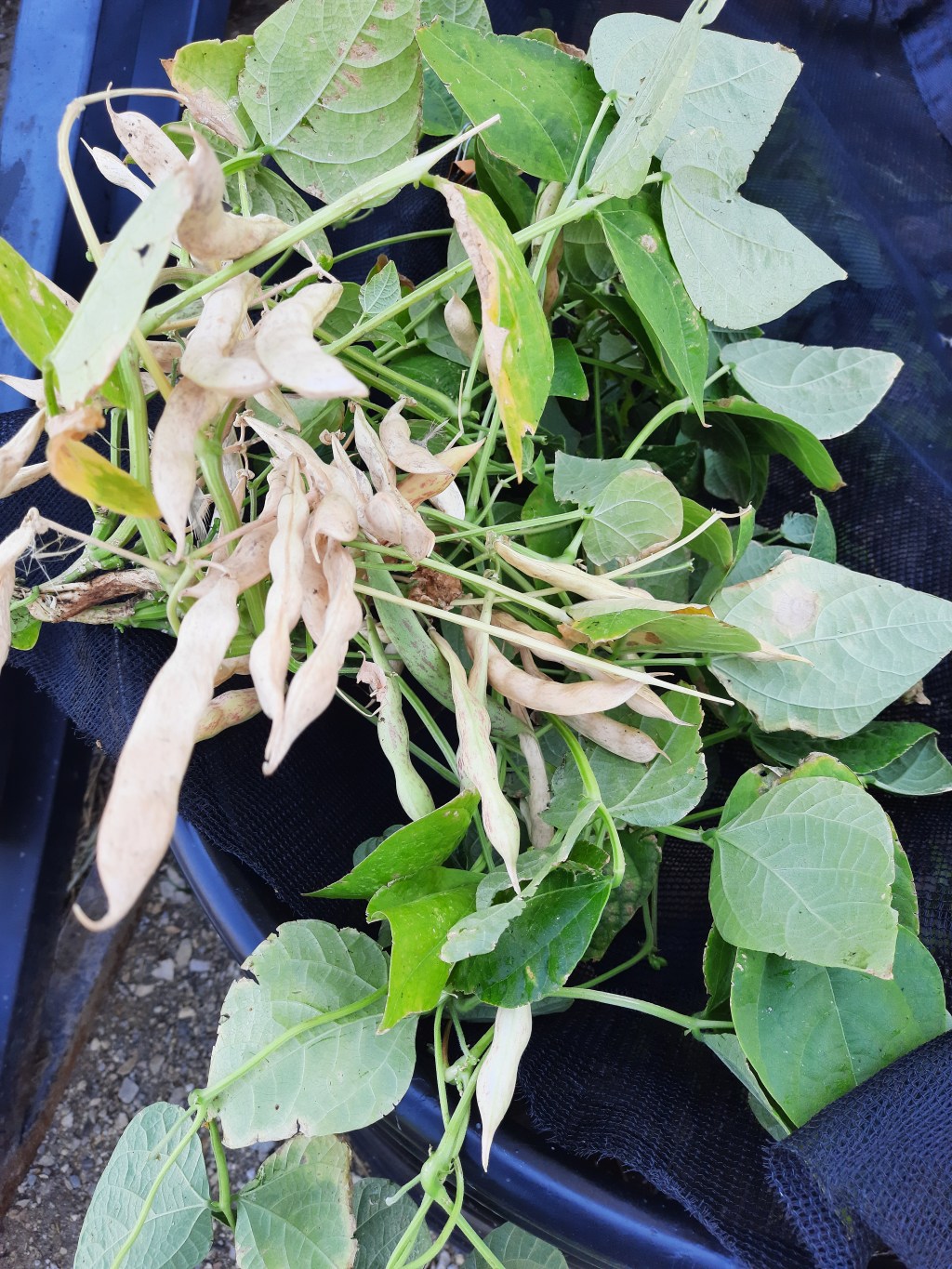
Bean Harvest Sutra One: Feed One, Feed All
Bean Harvest Sutra – One: Feeding One, Feed All1. Cut the stem of the pinto bean bush just above the soil. Leave the roots to rot. They will release nitrogen as they decay and leave organic matter to feed the soil. Their death and decay will leave space in the soil for water, air, microbes,…
 The Refuge Permaculture Center