
If you could snack on blueberries all day long, would you? Maybe add some blueberry pie or blueberry selzer water? Most people would say “Of course!” Why? Because that deep, complex flavor is so satisfying, and besides they are a “super-fruit”, right?
Every year I have clients call to ask “Please help me get these blueberry bushes going! They just don’t seem to want to live!” There is a good reason for that. I hate to disappoint folks, but our environment here in Central Wyoming is not the environment that a blueberry wants.
The famous architect genius, Louis Kahn, always told his students to look to the materials that were best for the building site, and then ask “Brick, what do you want?” An arch? A squared door frame? A winding path?
So when considering a new plant to add to your landscape please first ask: “Blueberry, what do you want?” It doesn’t want salty soils at all. Ever. It doesn’t want salty mineral in the water. It doesn’t want clay. It doesn’t want salty soil dust landing on its leaves, blocking the pores necessary as part of its vascular water system. Blueberry wants pollinators that have been visiting for thousands of years. You can try anything once. Repetition will not change reality. And it isn’t YOU or anything you may have done or not done. Blueberry does not want Casper. But…
But we have so many opportunities for that deep blue, earthy, complex flavor and satisfaction right here. Fruit from plants that love this environment and that abundantly fill the “super-food” criteria…some fruit being at the top of the “super-food” list!
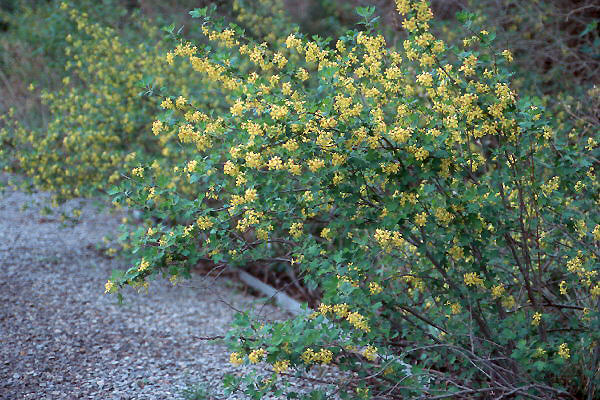
Finding these plants begins with observation. If you have hiked trails near the river or creeks you have seen our native Golden or Spice Currant growing everywhere. Branches heavy with fruits of all colors, drape to the ground. That is the best indicator of currants being perfectly happy here.
Native Heart Health
The Golden Currant that grows along all of the waterways in and near Casper Wyoming (“local” for me) bends its branches each year with the weight of the fruit. Some local people call these “gooseberries”, and in fact currants and gooseberries are of the same plant family. Gooseberry shrubs have extremely sharp, needle-like thorns, making harvesting a very careful operation. The local Golden Currant has no thorns. The ripe fruit of this native currant can be everything from white or creamy color through reds and purples all the way to almost black. It is those darkest fruits that have the most “super-food” value. The Golden Currant produces huge quantities of new plants in wet years and these can be carefully removed from the soil, along with their baby roots, and transplanted. It may take a year or two for production to start again. But the Golden Currant is the perfect indicator that other currants will also be very happy here. (Note: I am adding this local super-food plant to the nursery this year for sale in 2025!)
Black Currant
Last year was a heavy production year for the Black Currant in the Refuge Garden here. I harvested and froze pounds of them. Recently our winter seemed to have gone east, and I found myself taking on pruning in The Refuge Garden – pruning that I would normally do in April or May. As I reached the currant patch I pruned and took cuttings from the Black Currant (Ribes nigrum v. “Ben Sarek” X) and placed them in a five gallon bucket. As of this writing, those cuttings are already waking up. This Black Currant variety is one which is found in far northern Europe – winter hardy. I also love that it blooms in exactly the same weather and light that wakes up the bumble bees. Those heavy pollinators immediately find the tiny light lavender and green currant flowers. The weight of the fruit was so much that it pulled the branches down to the ground. It is the nature of the currant to have their branches weighted to the ground with fruit, with heavy spring snow or rain. Those low branches then set roots into the soil, and so produce new “clones” of the parent plant.

Another native to the Northern Rockies – but usually found in the mountains where more granitic rock and soil is found – is a native Elderberry. By finding the right place in your landscape, most Elderberry varieties will be very happy here.
Umbrellas of Glorious Super Fruit
The Elderberry shrubs that I have in the nursery and the bare root stock I have ordered, also have native roots. The Elderberry shrubs in my garden are all native North American Elderberry (Sambucus canadensis). I have added two other varieties – Samdal and Samyal – which are northern European Elderberry. Elderberry has been found to have a higher production of fruit when multiple varieties are planted near each other. I recommend planting in a protected place, usually along a building or fence that faces East and is protected from the wind. Also if there is a spot that always seems damp, due to the shading of East North East exposure, that area would be supportive of Elderberry. In Northern Europe a tea is made from the white flowers. These flowers tend to be fragile and a whole year of production can be lost by exposure to severe weather or wind on the day that they open. In the wild, the Elderberry generally grows in wet soil with other taller shrubs and trees creating a protected space. Obviously a generous bird left the seeds in the rich, leafy, protected earth.

Deep Burgundy: Wine or Juice
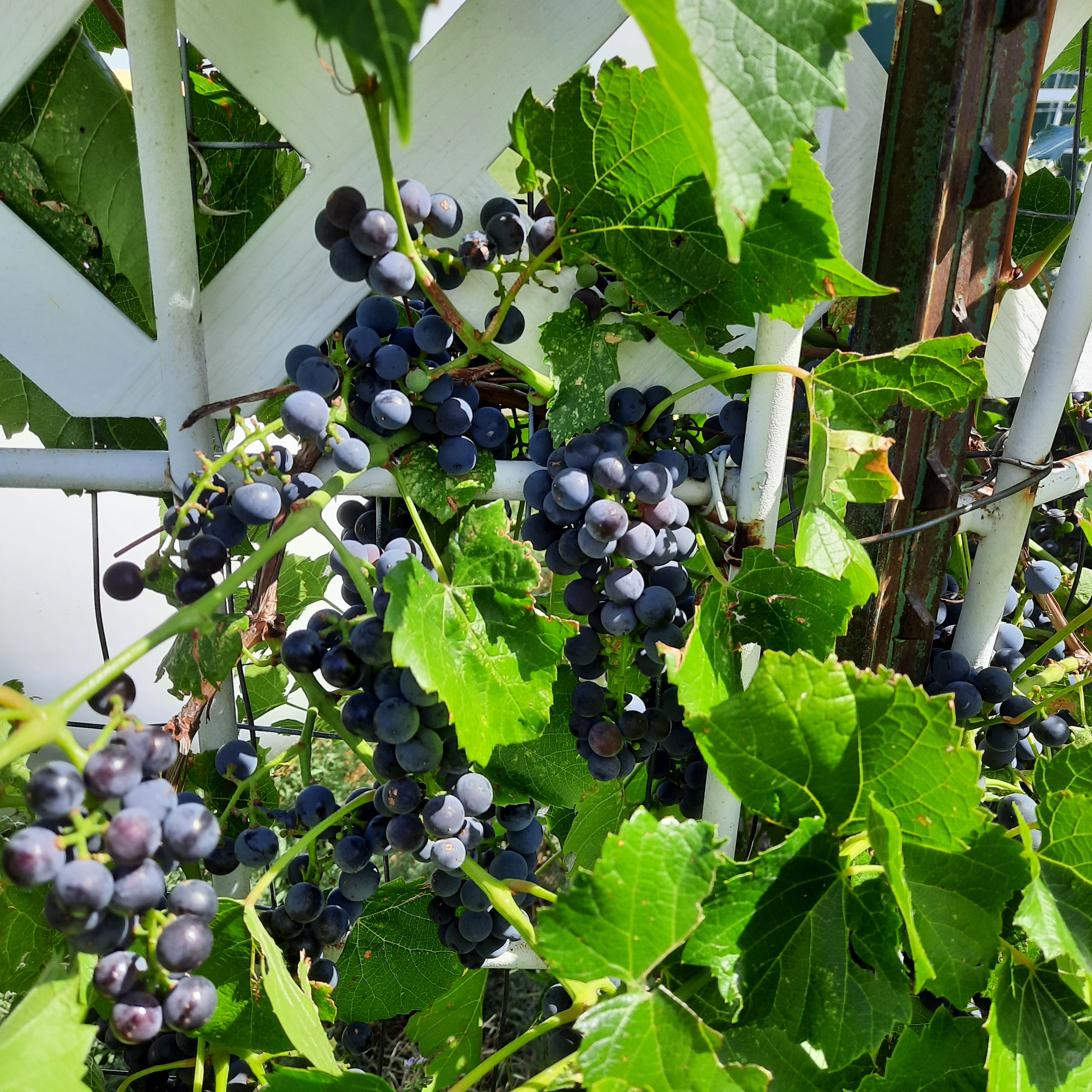
My best producer and survivor is the Mother Grape vine. She is now over 15 years old with older, woody, split-bark foundation vines stretching 12 to 15 feet. She has survived alkali clay soils, drought, severe cold, grasshopper invasions and local mosaic disease. Every year I take cuttings from her best vines to start new clones for sale. This year I have also ordered several new bare root stock for sale but also to add a new source for cross pollination. The variety is Concord ‘Valiant’. This variety was bred using an established Concord grape and a Fox Grape from Eastern Montana. The Concord is actually a human creation from the native wild grape in the eastern United States and Canada. One year after being eaten almost to the ground by a serious grasshopper invasion, the Mother Vine produced 25 pounds of grapes. Every year since then – except for 2023 when the winter buried her beyond her bloom time – she has provided around 20 pounds.
So, not only is designing your garden and working with these plants immensely healthy for your mind and body but the consumption of these fruits absolutely has a significant benefit for your overall health. So why are these simple fruits so powerful?

All The Benefits In The Garden
As you have probably already observed, all of these plants have fruit with very dark skins. It is the chemical composition of that color that puts these in the “super-food” category. Being able to allow these fruits to ripen “on the vine”, to be able to harvest them, wash and freeze them all in your own home, these are very real benefits. Learning how to keep the plants happy and producing, and finding success, is so healthy for the mind. And physically working with the plants in the open air and sunshine (the best natural source for Vitamin D), involves moving and stretching and strengthening your entire body. (Did you know that squat exercises to strengthen all of the muscle groups around the hips not only support your hip joints, but is associated with an increase in HDL, the good cholesterol? HDL cleans LDL, or “bad” cholesterol, out.) Fruits and vegetables – even some grains – that carry deep color also carry polyphenols and anthocyanins.
The Power of Pigment
‘Polyphenol’ from the Greek for ‘many chemical structures’ meaning complex chemical structure, and ‘anthocyanin’ from the Greek ‘flower’ ‘blue’ and refers to the pigment found in the fruit – this is found in all blue fruits including but not limited to: blueberries, serviceberries, blackberries, elderberry, purple grapes and black currants. Color in fruits, vegetables, even grasses such as black rice, is the cue that these foods contain polyphenols and anthocyanins.

Through rigorous research, polyphenols and anthocyanins have been found to be associated with anti-inflammatory activity. Inflammation is at the root of the majority of chronic diseases – diabetes, cancer, autoimmune diseases and cardiovascular issues. These chemicals found in the dark fruit reduce inflammation. They also have anti-microbial effects. Reducing inflammation throughout the body allows tissues to heal properly, relaxes and opens blood vessels for better flow and lower blood pressure, and frees the immune system to deal even with cancerous cells.
These plants are so beautiful in the garden, provide habitat and food for pollinators, drop thick blankets of leaves that mulch the plant for winter and then decay into the soil to feed the microbes there. In so many ways getting this kind of fruit this way – ripened on the shrub or vine, picked with your own hands, prepared in a mindful way and enjoyed in your own home – is such a fulfilling way to feel that you are taking care of yourself, your family and friends and neighbors.
In addition to all the benefit to cardiovascular health, another important chemical in Elderberry is quercetin. Quercetin is a flavonoid and antioxidant that is known to support lung function. This seems to be strongest for individuals with asthma and COPD. Although studies have not come to a scientific conclusion, studies point to Elderberry possibly being a safe option to treat viral respiratory illness as it does not overstimulate the immune system – a significant problem during the beginning of the COVID Pandemic.
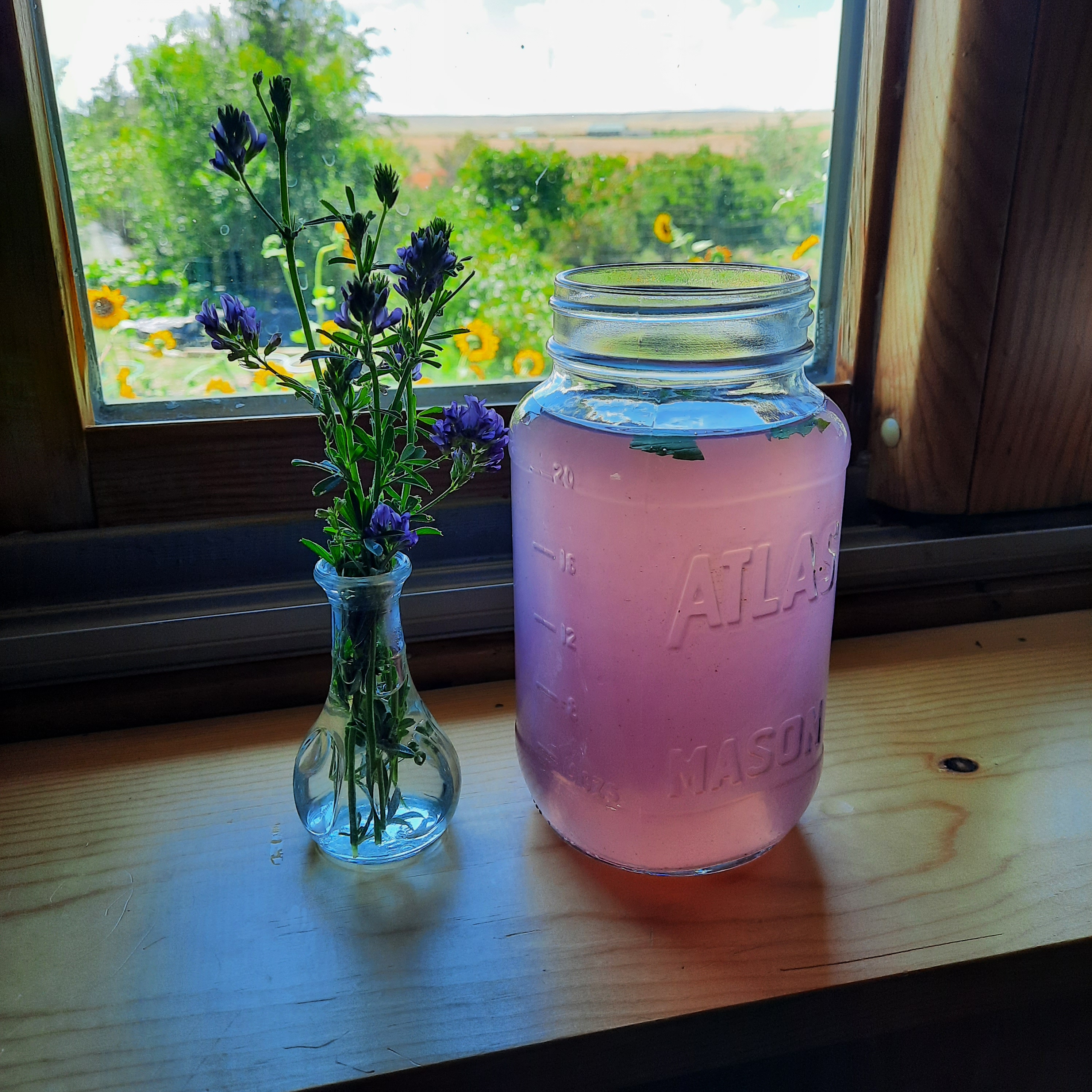
Fresh fruit is the best source of these chemicals. Grapes and currants can be eaten ripe and fresh from the plant, although Black Currant can be a little “wild” that way. Elderberry needs to be cooked to neutralize some toxic substances, just like chokecherry. But even after processing into jams, jellies, juice, teas, even wine (Malbec wine is one of the highest in these chemicals) the product retains the benefit. If you are mindful during processing you can increase their presence in your final product. I use a very low and slow simmering approach, and gentle pressing with a mashing tool to release more of the skin juice and pulp. This treatment reduces the loss of the beneficial elements, although reduction is expected with the heat. So just put a little more syrup on the pancakes! I do.

Special Order Plants for 2024:
With all of this in mind, the Special Order Plants for 2024 will all have “super-food” value, have been tested here in the Refuge Garden and Nursery, and are consumed on a daily basis by me. (Note: I do not ship plants but wherever you are it is best to buy local, sustainably grown plants for your area. llg)
On plants that are two years old or under, I always wait until they wake up healthy and happy to deliver.
Native, Samdal and Samyal Elderberry 
Valiant Grape 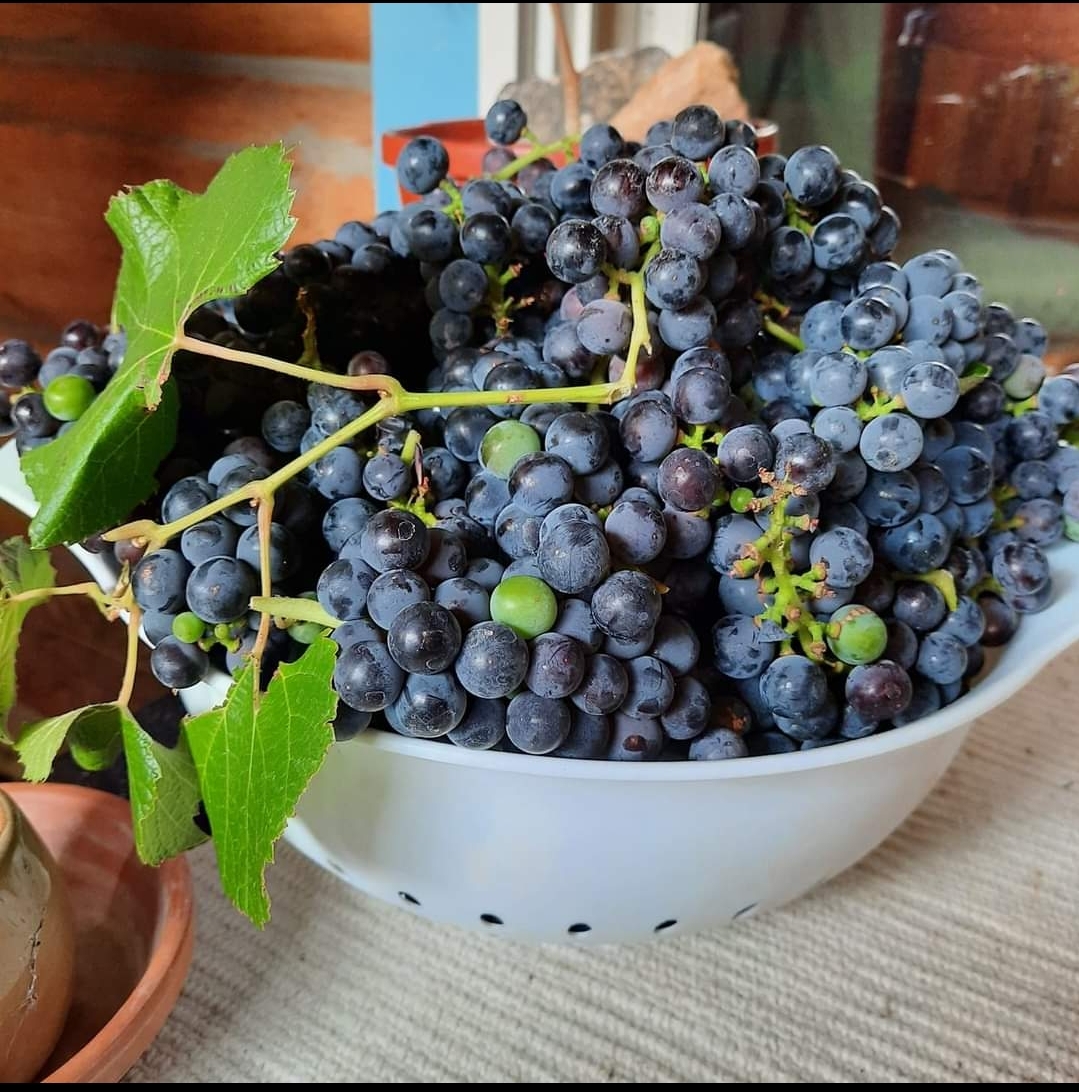
Black Currant 
2 gal containers $17.50 **** 5 gal containers $22.50

Additionally I will once again have cold-hardy, salty-soil loving
Mary Washington Asparagus roots!!
Bundle of five roots $15.00
(Note: These should produce harvestable spears in 2025; be patient; once they get going you should have plenty to freeze for over winter.)

Got Proof??
As many of you know I am not only a knowledge and learning nut, but also a bit of a cynic. So in writing this post I did quite a bit of research to support what I’ve just shared. Don’t believe it because I say it. Here are some papers online that will either convince you or put you to sleep.
For Reference: 1 milligram is slightly less than 1/16th of a cup
Black Currant Research
National Institutes of Health “The health benefits of black currants” 2012
Polyphenol intake: More than 650 mg per day have lower death risks than those who get less than 500 mg a day; 1-2 g per day associated with chronic disease prevention
National Institutes of Health “Current evidence on the effect of dietary polyphenols on chronic diseases”; Costa etal, 2017
Black Currants 758 mg per 100 grams of food; 100 grams of food approx. equals 2/3 cup
ScienceDirect.com “Application, emerging health benefits and dosage effects of black currant food formats” Bin Xue, etal Journal of Functional Foods (Review of existing research) August 2022
My favorite: Black Currant syrup on multi-gran buttermilk pancakes
Grape / Wine Research
National Institutes of Health
2.6 mg of polyphenols per milliliter of Concord Grape Juice
“Concord Grape Juice Polyphenols and Cardovascular Risk Factors: Dose-Response Relationships” Blumberg, etal; Dec 2015
“These results suggest a clear relationship between consumption of even modest serving sizes of Concord grape juice, flavonoid intake, and effects on risk factors for cardiovascular disease.”
My favorite in winter: Half cup of homemade grape juice concentrate; fill the rest of the glass with hot water and sprinkle with a very very light dust of cinnamon.
Elderberry Research
Elderberry: 870 mg of polyphenols per half cup servings, but must be processed; reduced polyphenols but increased anthocyanins; stability of juice decreases to 40% during the first 30 days of unfrozen storage.
“Advanced research on the antioxidant and health benefit of elderberry”; Sidor and Gramza- Michalowska, Journal of Functional Foods, October 2015
“Elderberry for prevention and treatment of viral respiratory illnesses: a systematic review”; Wieland et al, BMC Complement Medical Therapies
#tarafarmandnursery #therefugepermaculturecenter #naturalhealth #grape #elderberry #blackcurrant #currant #superfood #permaculture #sustainable #gardendesign #healthyaging #cardiovascularhealth #antiinflammatory #jam #jelly #wine #fruitjuice #fruitshrub #hardyperennials #selfcare
 The Refuge Permaculture Center