
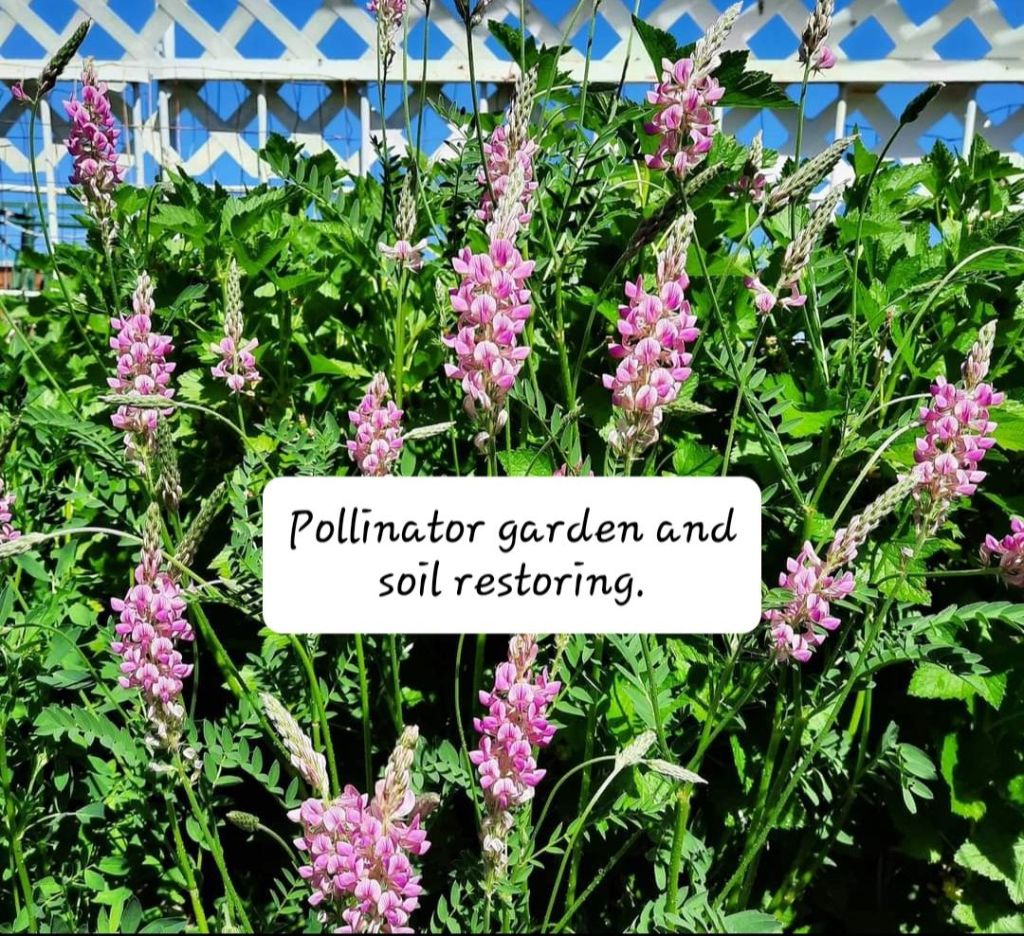
The raspberry patch is so packed full of plants that it is difficult to open the soil for restoration. And the grape vines have been producing so heavily the last few years it clearly is time to do something other than lay compost or mulch on top of the soil. Some research and some conversation with the local agriculture experts and I decided on a mix of nitrogen-fixer plants as ground cover. These plants take up nitrogen from the air and soil beyond what the plant needs immediately. They have evolved to store extra nitrogen for high production, drought, severe weather, any environmental change that would threaten the health of the plant. The nitrogen is stored in small nodules on the roots. When the top of the plant is damaged – by weather, or grazing, or machines – the root associated with the damaged portion also dies and releases the stored nitrogen. These plants tend to like dense soil – especially salty clay, something many of us on the Ancient Seaway bottom, slightly east of the Rocky Mountains, call “soil”.
And so I seeded the grape and raspberry beds with a mixutre of Red Clover, Hyton’s Blend Alfalfa and Sainfoin. All did well but the Sainfoin stood out from the others.
Sainfoin is perennial. The roots not only have the potential to add nitrogen, but they open the soil below ground so that moisture, organic matter and microbes can more freely move through the soil. Yes, even allowing some air flow, as many of those helpful tiny bugs require some oxygen. Over a couple of years, big changes can occur.
I watch for the first flowering for pollinators in late June. I allow the flowers to go to seed and then collect seed for use elsewhere. I then cut the protein-rich stalks and leaves, with part going to the compost pile (the ever necessary Green in composting) and part going to any livestock (here ducks and geese, but all livestock including chickens.). Sainfoin is one of the only N fixers that does not cause bloat when eaten green. This cutting causes the release of some nitrogen from sequestration in the roots. I then allow the plant to bloom again in late summer for pollinators preparing for eggs/hibernation/ migration. In very early spring, before flowering, I cut again to encourage root growth, expanding potential for soil “tillage” and nitrogen release at root zone. My geese love to prune the waking plants, and never touch the grapevines or raspberry plants. The Sainfoin flowers are stunningly beautiful. I use them as cut flowers in the second bloom, or you can let them go to seed (this seed can be rather expensive!)
Soil improvement, stunning Spring blooms, pollinator-attractor, food and forage, compost enhancement, and natural fertilizer for fruit-bearing shrubs – who could ask for a better garden companion.
$2.50 for 2+grams of seed for the small garden; larger quantities available by request. To order email: tarafarmandnursery@gmail.com. or text to: 307.262.8043
I am a licensed Seed Dealer in the State of Wyoming.
 The Refuge Permaculture Center