


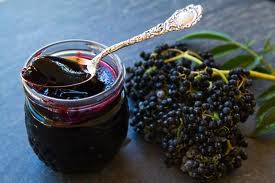
From the rich, deep blue-black of the ripe berries to jam simmering on the stove…from full, lacy umbrellas of tiny, creamy white flowers steeped for tea, this native is so beautiful in texture and color and grows amazingly well even in the Wyoming salty clay soil.
The Elderberry shrub is native to the entire northern hemisphere. Our native here in the Northern Rocky Mountains is Sambucus canadensis. In the wild this shrub loves the protection of larger trees – like chokecherry, serviceberry, willow, or even cedar. With this in mind, in your yard find the spot that is protected, that tends to stay moist, and has direct morning sunlight and shade in the afternoon. The north – northeast side of any building or of established tall shrubs or trees is usually the place. That harsh, blow-torch wind we get will be the worst situation for these plants. Also, some evergreens – like juniper or spruce – will steal all the water and nutrients from elderberry.
This zone in your yard will also offer protection from our most intense thunderstorms. The beautiful umbrellas of flowers are fragile and one quick intense storm on the day they bloom can destroy the open flowers, and the weather definitely sends the pollinators into hiding. (By the way, the primary pollinator for the elderberry in our area is an extremely tiny, black fly. ) In Northern European regions the blossoms are used to make wonderful, soothing teas and tonics. Take a look at
ww.plantydelights.com/elderflowers-benefits-harvesting-tea-recipe/
Those who know have found that having more than one variety in your garden improves pollination. To take advantage of this I always have at least three varieties available in the nursery: the North American native, and two from Scandinavian foundations. (Note: We should consider “regions”, “climate” and “natives” in selecting plants. In other words: if we have a wild currant that grows like crazy here, it is a northern-hemisphere-cold-climate lover and other similar currants will be found around the globe!)
Beyond the amazing flavors of elderberry pie filling and elderflower tea, the health benefits are among the few “natural supplements” that are backed up by excellent research. In any drugstore you can now find Sambucus lozenges and liquids to help soothe upper respiratory inflammation. During the pandemic The Refuge Nursery sold out of elderberry plants. (But there are plenty in there now!)
And the elderberry is included in The Refuge Heart Healthy Plants for 2024. The berries are rich in polyphenols which act to support cardiovascular health – again, as an anti-inflammatory for blood vessels. That deep, earthy blue-black color is always a clue to a “super-fruit”.
Elderberries carry elements that need to be neutralized by limited processing – either simmering or complete drying. To preserve the highest content of the healing elements of the flowers or berries, when you are processing these, simmer them low and slow, and cover the pot so that anything lost in the steam is returned to the liquid.

I often mix Black Currant and Elderberry for pints of rich, dark, earthy-sweet jam. My “dessert” many evenings is this jam on whole grain toast or bagel or mixed in with vanilla Greek yogurt. … and now I’m hungry…
For a better idea of how this gorgeous plant will look in your landscape, add your email to this site and I will be sending announcements of tours this spring thru fall. You are more than welcome to come out in the spring and see my plants to get an idea of how this stunning native can fit into your garden.
To reserve elderberry – or any of the Heart Healthy Special Order Plants – contact me by text at 307.262.8043 or email to tarafarmandnursery@gmail.com
Two gallon container plants $17.50; five gallon container plants $22.50 Discounts are available for OLLI Permaculture students, previous clients and customers, and all members of The Refuge Permaculture Newsletter email group. These plants should be ready for their new homes in mid-June and I will be delivering plants to town every Wednesday beginning June 1.
Peaceful earthing! Keep those fingernails full of dirt!
 The Refuge Permaculture Center
One response to “Special Order Plants: Just Breathe…. Elderberry for Heart and Respiration”
This is a fantastic post! I really appreciate the depth of knowledge you are sharing about the plant, all the tips on selecting variety, the interrelationships of the pollinators, the orientation to the north-northeast, uses, harvest, etc. Your depth of familiarity with the plant is clear. Thank you so much for sharing!!