
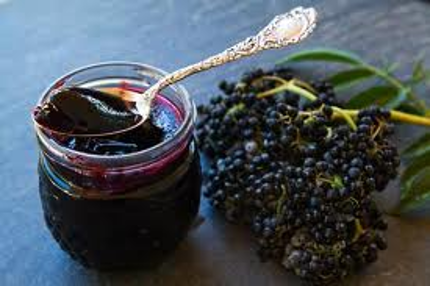
Three varieties available this year:
Northern European Samdal/ Samyal Varieties
Native North American Cultivar ‘Nova’
Native North American Cultivar ‘Adams’
2 gallon pot $20.00
5 gallon pot $28.00
(Plus Sales Tax)
A Quick Look (Not including keeping evil witches out of your garden!)
1. The benefits of this plant go way beyond the fruit. Human and beneficial insect health benefits are huge.
2. All Elderberry plants are partially self-pollinating. Elderberry plants have much higher fruit production with two varieties in the same garden.
3. Yes, they can be planted now. You just need to chgive them a little water each day through this transplant season.
They are best planted for morning sunlight, consistent soil moisture and most importantly, out of the wind. In the Casper area, this usually means the northeast side of a corner of a building or an established windbreak of trees or a fence.
4. Not only are they pollinator attractors, but these plants are also nesting, rearing and feeding habitat for pollinators and beneficial insects, giving your little fruit creators a home for the entire year.
5. Never eat the elderberries raw. They are edible after a very simple processing. Details below.
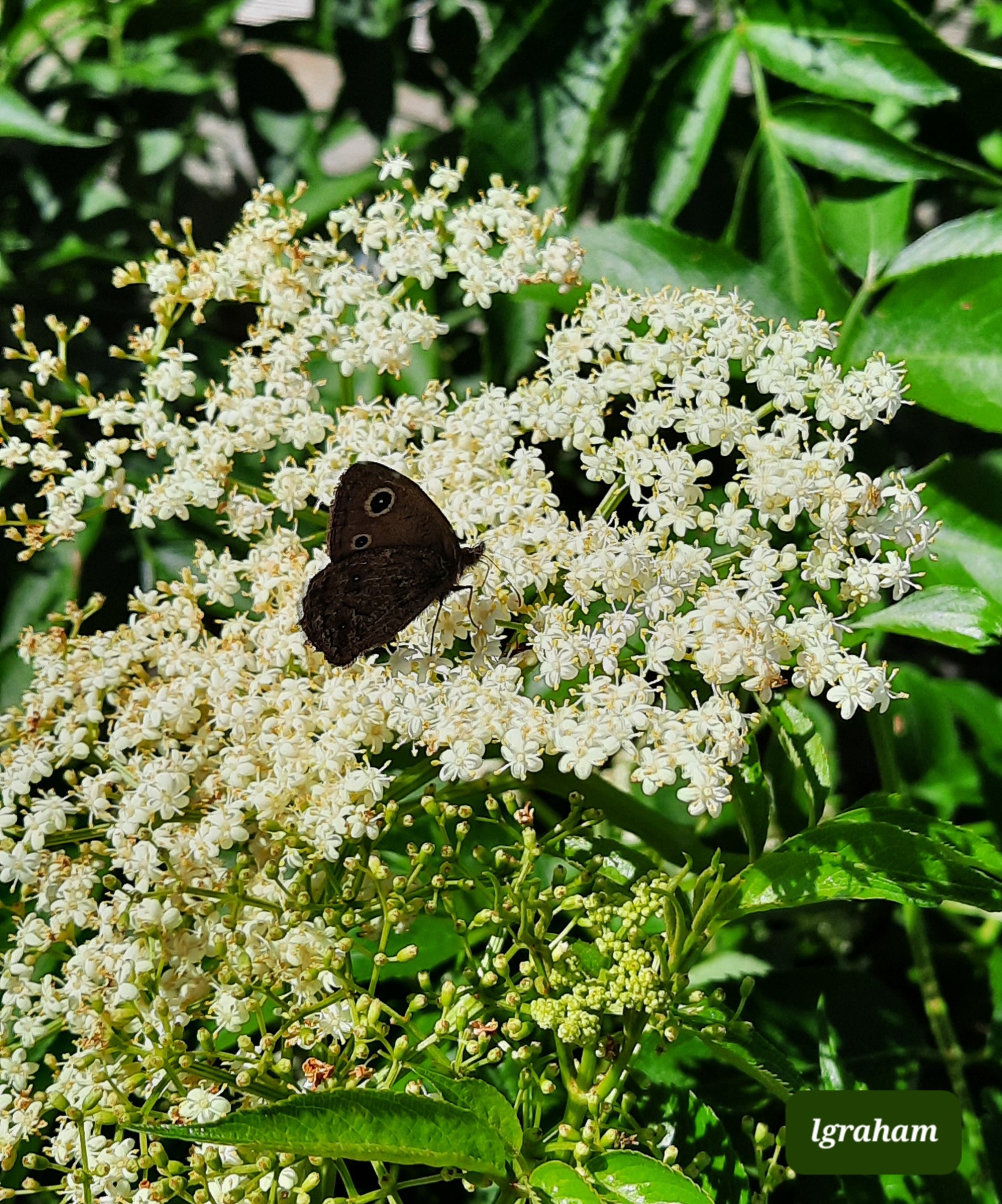
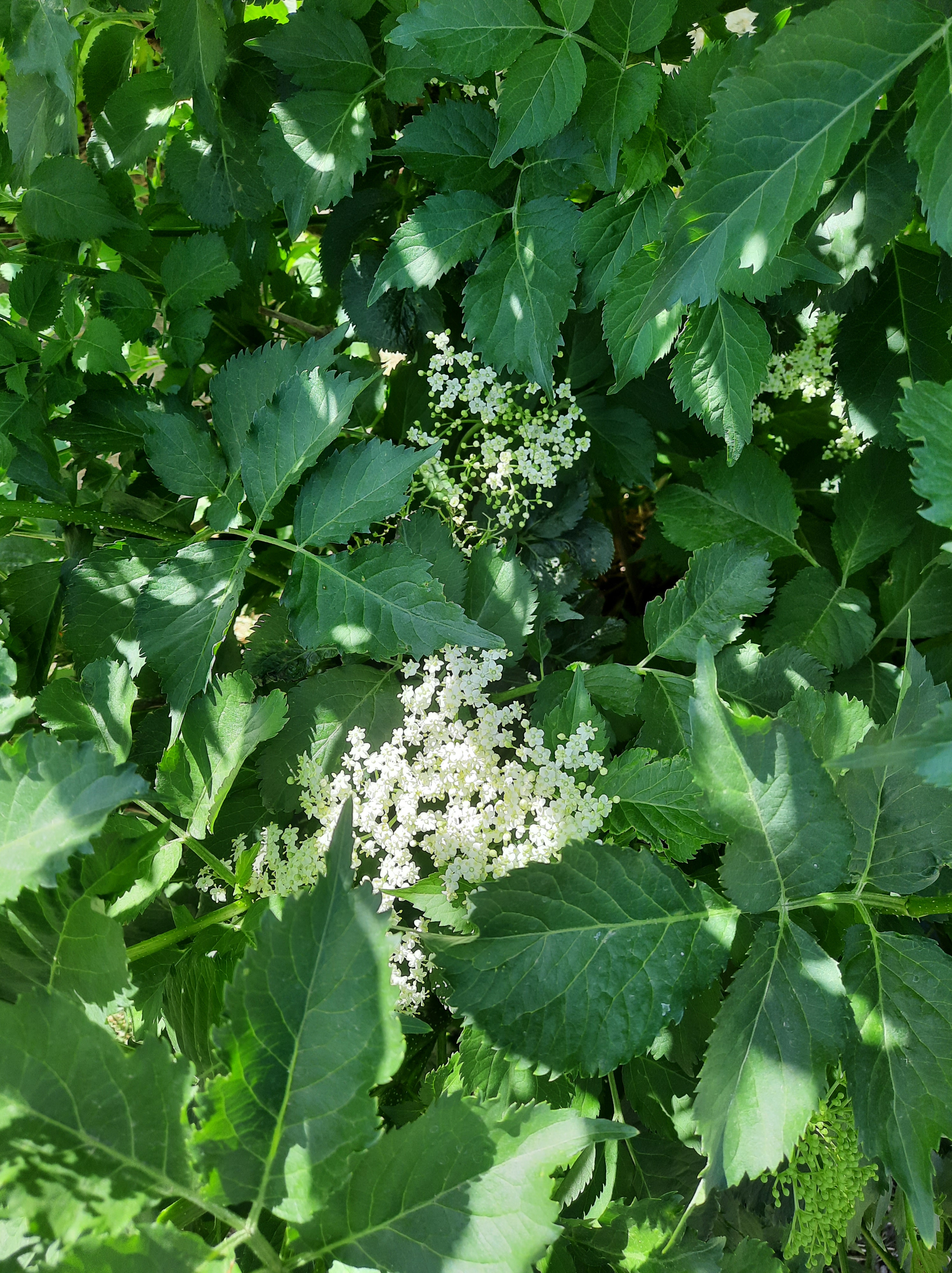
A tall, dark green leafy shrub that is a gateway to the fairy realm, a defense against evil witches, and a sacred, living entity ~ the Elderberry. If you have day dreamed about creating a small forest of naturally grown food this is the plant to start with.
Parasols of tiny, creamy white lacy flowers. Heavy, full umbrellas of berries turning from green to the deepest purple. Rich, deep blue-purple jam and pie filling. Tangy, blue juice or homemade wine. Research-proven respiratory and immune support. Significant anti-inflammatory. And simmering fruit on the stove in January to make a deep purple pancake syrup or with a touch of cinnamon, a thick deep purple pie filling ~ the list of benefits from the Elderberry plant seems never-ending.
Not only humans benefit. Your entire garden is blessed by this shrub.
Beautiful Bugs
Beneficial insects and pollinators – like bumble bees, longhorn beetles and over 40 species of butterflies and moths – seek those tiny flowers and help them become the deep blue fruit. The syrphid flies not only seek nectar from the Elderberry flowers, but they use the plant as nesting habitat. They leave their home base to feast on their favorite food: aphids. When partially pruned in the Fall the small openings at the ends of the remaining branch are preferred nesting sites for other pollinators and beneficial insects to lay eggs that stay over winter and come into the world in Spring ~ just in time to feed on damaging baby bugs and to stick around for the nectar, pollinating the flowers in a new generation. Small carpenter bees, mason bees, leaf cutter bees and yellow-faced bees all use Elderberry branches for nests. The community of insects makes the shrub their home and makes the plant your food.
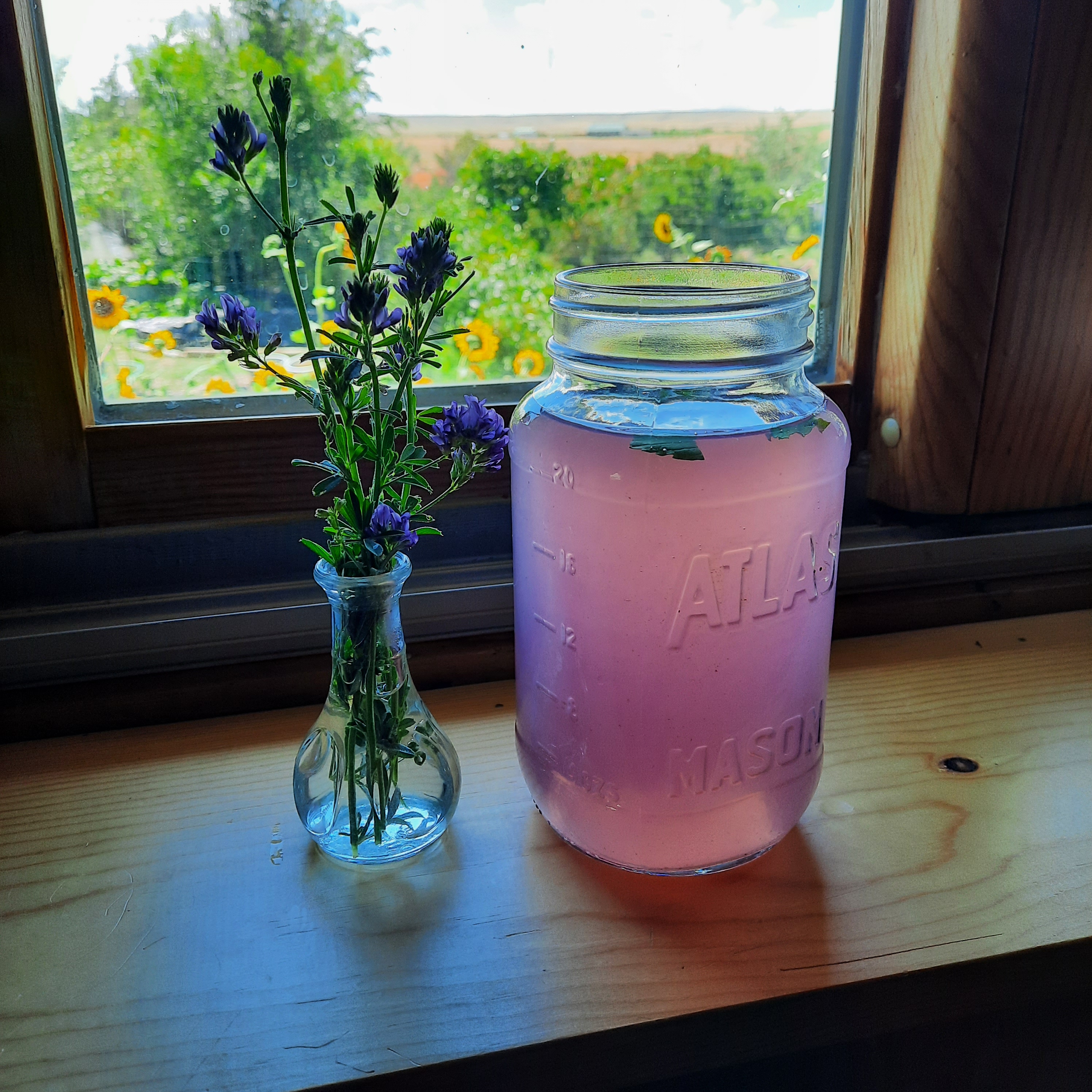
And Blue Super Foods!
But the most significant health benefits for humans come from the deep blue-purple skins of the berries. These contain some of the highest natural levels of anthocyanins and Quercetin, both research-proven antioxidants. Other elements of “blue fruit super food” include support for the vascular system, often reducing high blood pressure. And a key element, reflected in the Latin name of the plant Sambucus, has been shown to have a supportive action for the upper respiratory system. The fruit is high in Vitamins A and C. One cup of cooked Elderberries has half of the daily requirement of Vitamin C and all of the daily requirement of Vitamin A.
Interested in the science behind these claims? Here is the link to the National Institues of Health Archive of research.
pubmed.ncbi.nlm.nih.gov/29241318/
Ripening on a bush right in your yard also means that you use less sugar and pectin for preserves. The fruit is ripened sweet and should fall off with a very gentle tug. The ripened fruit also contains high levels of pectin to create that thickness for jams and pie filling. Test the flavor as you finish the processing. Not only are the berries delicious, but the umbrellas of flowers are added to white wine or high-quality gin or may become homemade syrup which is added to sparkling water, baked goods or poured over pancakes.
Simmering Blue Richness Gives Us Food
Processing the fruit is very important. Elderberry should never be eaten raw. The fruit contains cyanogenic glycosides which turn to cyanide when exposed to stomach acid. TProcessing by cooking or total dehydration neutralizes all of the problem. The fruit should always be processed using long slow simmering until the berries can be easily mashed. Hot and fast boiling will also significantly reduce the benefits of the berries. Strain out the seeds.
Also, the medicinal qualities of the fruit may interfere with medications for diabetes and diuretics.,Please do your research on this.
Varieties Available from The Refuge Nursery 2026:
Northern European Samdal/Samyal Elderberry
The benefits of this variety are hardiness and the timing of flowering. It flowers around the beginning of May, which can be a problem with our Spring snowstorms. But after losing all of its leaves to frostbite in Spring 2026, within two weeks it had started all new leaves and two more weeks and it is now densely covered with flowers. It would appear that it recovers amazingly well, and that the stress converted to heavier fruit production. The North American varieties flower much later, having learned over the eons all about those deep freeze days. But the difference allows for either two crops or at least one crop that survives the freeze.
Adams Elderberry (Sambucus canadensis ‘Adams’)
Highly productive, native North American cultivar; 6-10 feet wide and tall at maturity; Zone 3; highly adaptable to different soils.
Nova Elderberry (Sambucus canadensis ‘Nova’)
Highly productive, native North American cultivar; 6-8 feet wide and tall at maturity; Zone 3; increased production with pruning in late Autumn or very early Spring. With Spring pruning, check the ends of the stems for evidence of packing, as native pollinators use the hollow stems for over-wintering nests and eggs.
Ready to Order? Questions, ideas, experiences, interest? Reach out to me through tarafarmandnursery@gmail.com or by text to 307.262.8043
 The Refuge Permaculture Center
2 responses to “So Many Beautiful Benefits: Elderberry”
Hello, I found this to be so informative. I hope all is well with you. I love that you are still pursuing what you love to do. I had to let you know. I remember you well from the Hill family, and, am enjoying FL lin retirement. All goodness to you. Jill Reed
My! that does go a long way back! Since my alleged retirement from the City of Casper I work harder and longer hours, but I am absolutely loving it. Thank you so much for the kind, supportive comment. Enjoy that beautiful, rich environment; be well, Laurel